Caring for Classic Round Neck: Keep the Fit and Print Right
A classic round neck should get better mileage, not lose its shape after three washes. Here is how to wash, dry, store and size your tee without wrecking the…
Caring for Classic Round Neck: Keep the Fit and Print Right
The fastest way to ruin a good tee is to treat it like a towel: hot wash, hard spin, direct sun, then a hanger pulling at the neck. Caring for classic round neck pieces is less complicated than that. Keep the wash cool, protect the graphic from friction, dry the garment with its shape intact, and choose the size for the shoulder line rather than the label alone. The result is a tee that still looks intentional after repeated wear, not one that turns into sleepwear by week three.
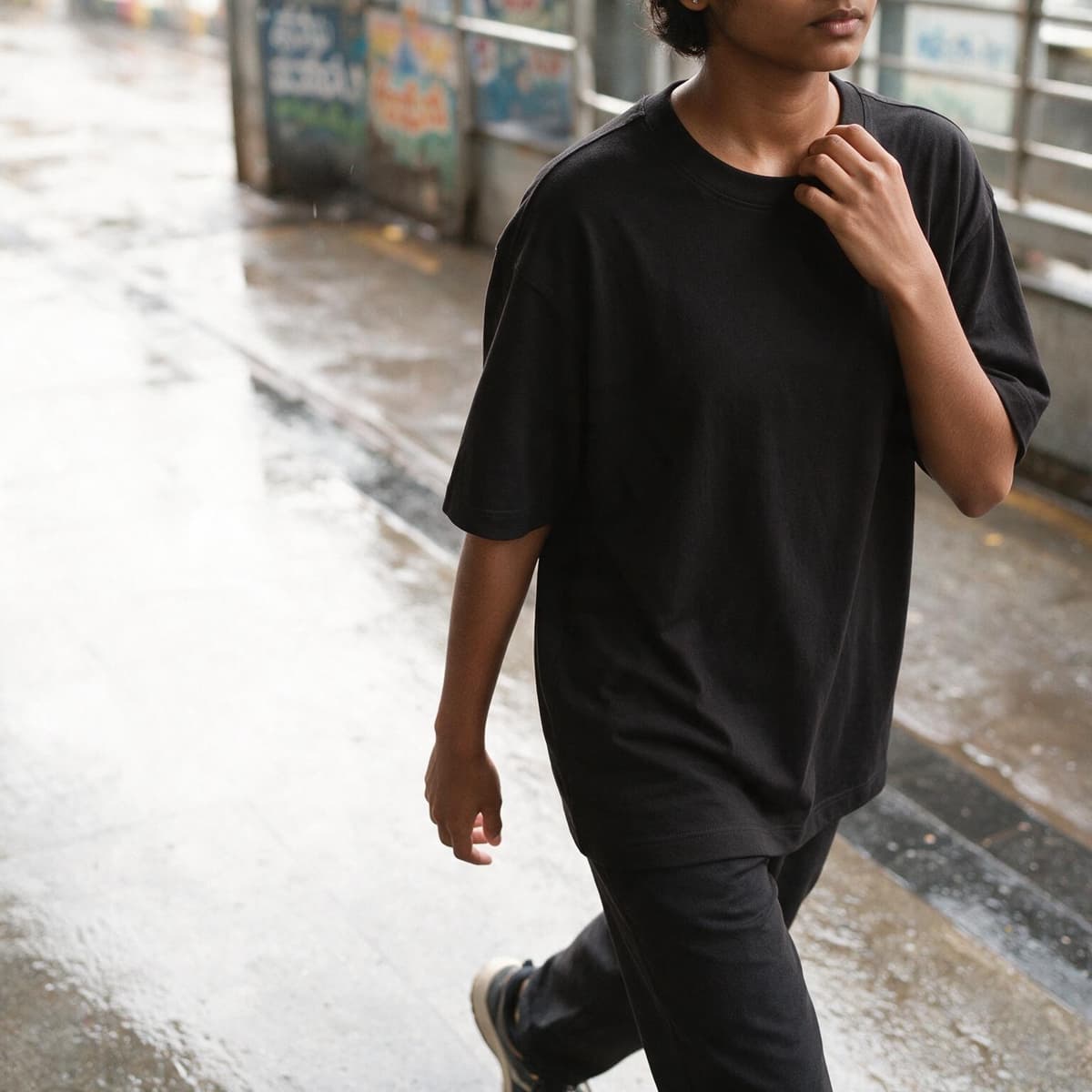
That matters even more with streetwear cuts. A classic round neck can be regular or oversized, but the construction is visible: the collar, shoulder seam, sleeve fall and body length all decide whether the tee looks considered. Care cannot fix a poor fit, but it can stop a good fit from slowly collapsing.
What caring for classic round neck actually means
Think of care as protecting three things at once: the fabric, the neck rib and the print. The body needs gentle washing so it does not lose its hand or shape. The collar needs less heat and less pulling. The graphic needs to face inward during washing so it is not constantly rubbing against the drum, other garments or a rough drying surface.
Before you wash a new tee, check the product page and inside label for the actual care instructions. Fabric descriptions such as heavyweight cotton, a cotton blend or a polyester-cotton blend tell you what the garment is made from, but they do not replace the care label. If the label is missing or unclear, use the safer routine below.
The wash routine that protects the graphic
Turn the tee inside out before it goes into the machine. Use cold or cool water, a mild detergent and a gentle cycle. Keep dark graphics with similar colours, and do not overload the drum: a tightly packed wash creates more rubbing, which is exactly what you are trying to avoid.
- Close zips, hooks and rough fastenings on the rest of the load.
- Turn the tee inside out, keeping the collar flat rather than twisting it.
- Use a small amount of mild detergent. More soap does not mean a cleaner tee.
- Choose a cool, gentle wash and a moderate spin.
- Remove the tee soon after the cycle ends so damp fabric is not sitting in a compressed heap.
Skip bleach, harsh stain removers and fabric softener unless the care label specifically allows them. Bleach can shift colour, while softener can leave a coating that changes how the fabric feels and handles moisture. For a mark, dab from the reverse side with cool water and a little detergent before washing. Scrubbing the front of a printed area is a bad trade.
Does the print crack or fade after a few washes?
Any printed garment can show wear if it is washed hot, rubbed aggressively or dried under intense heat. That does not mean cracking is inevitable after a few washes. The useful habits are simple: turn the graphic inward, wash cool, avoid abrasive loads and never iron directly over the print.
If ironing is necessary, use low heat on the reverse side or place a clean cloth between the iron and the garment. Do not drag the iron across the artwork. A printed surface should not be treated like a plain cotton panel.
You can also judge a tee before buying it by reading its product information properly. Look for the listed fabric, fit and colour, then treat any missing detail as something to ask before ordering. A page that says heavyweight or oversized gives you useful direction, but it does not tell you every detail about warmth, drape or care.
Drying in Indian weather without stretching the tee
The drying stage is where many collars get quietly damaged. Do not wring a wet tee or hang it from the neckline. Press out excess water gently, shake the garment once to settle the seams, then hang it from the lower body or lay it flat if the fabric feels heavy.
In monsoon weather, airflow matters more than blasting the garment with heat. Use a covered, ventilated spot and leave space between garments. A fan can help move damp air, but direct high heat can make the fabric feel harsher and may stress the print. Avoid leaving a wet tee bunched in a basket overnight; that is how stale odour and uneven drying begin.
Direct sun is useful in moderation, especially for drying quickly, but long exposure can fade darker colours. Turn printed and dark tees inside out and take them in once they are dry. A wet garment is heavier, so support it across more than one point instead of letting one narrow hanger carry the whole load.
How to stop a white tee going grey
Greying usually comes from colour transfer, detergent residue, body oils or a wash load that is too crowded. Keep white tees separate from pale colours that have not proved colourfast. Wash them after sweaty wear rather than letting the fabric hold on to residue for days.
- Wash whites with whites or very pale basics, not with denim or dark graphics.
- Use the detergent amount recommended on the bottle, not a heavy pour.
- Do not pack the machine tightly; water needs room to move through the fabric.
- Treat marks before washing instead of repeatedly increasing the wash temperature.
- Dry the tee fully before folding it, especially during humid weather.
Avoid improvised bleach baths unless the care label permits them. They can weaken fibres and leave uneven patches. If a white tee has a printed front, protecting the artwork still comes before chasing maximum brightness.
Sizing: choose the shoulder line before the letter
Between two sizes, start with the shoulder seam. On a classic fit, it should sit close to the end of your shoulder without cutting inward. On an oversized tee, the seam can fall past the shoulder, but it should still look deliberate. If it drops so far that the sleeve opening reaches deep down the arm and the body loses all shape, you have gone past relaxed into boxy.
Measure a tee you already like rather than guessing from your usual S, M or L. Lay it flat and measure across the chest just below the armholes, then compare that measurement with the product's size chart. Check body length as well. Two tees with the same chest width can look completely different if one finishes much lower on your frame.
- Choose the smaller option between two sizes if you want a cleaner shoulder and less volume through the body.
- Choose the larger option if layering and a clearly oversized silhouette are the point.
- For a shorter frame, watch body length more closely than sleeve length.
- For a broader shoulder, check chest and shoulder measurements together rather than sizing up automatically.
- If the product lists only one available size, do not assume it will fit from the product name alone.
A shorter frame can absolutely wear oversized tees. The fix is proportion, not abandoning the cut: keep the hem from swallowing the legs, let the sleeve end around the upper or middle arm, and use a straighter trouser or a clean tuck to show where your body starts. The guide to styling oversized tees without looking boxy covers the outfit side; the care side begins with preserving those original proportions.
Heavyweight fabric and Indian summers
Heavyweight does not automatically mean unwearable in Indian heat. It generally means more material than a thin tee, so the garment can feel warmer in still, humid conditions. The actual experience also depends on airflow, fit, activity and how quickly the fabric dries.
For a hot commute, a heavyweight oversized tee may feel comfortable if the room through the body allows air to move, but it can be too much under a tight layer. Wear it on its own, choose lighter layering and avoid stacking it with a dense overshirt in peak afternoon heat. During monsoon, prioritise pieces that can dry properly between wears rather than leaving damp clothing in a closed bag.
Fabric weight is worth asking about before you buy, but do not treat it as a quality score by itself. A thin tee can be well made, and a heavy one can still be badly sized. Look at the fabric description alongside the fit, measurements and construction details.
Storage, collars and the small habits that matter
Fold everyday round neck tees instead of leaving them on hangers for weeks. Hanger points can pull at the shoulders, particularly when the garment is damp or heavy. If you do hang one, use a broad, smooth hanger and place it through the bottom opening rather than stretching the collar over the hook.
Store tees completely dry, with printed surfaces facing inward if they are stacked tightly. Do not press a heavy pile onto a damp garment. Give frequently worn pieces a little breathing room, and rotate them so one favourite is not taking every wash, commute and sudden rain shower.
What usually goes wrong
Most damaged tees follow a predictable pattern. The graphic is washed face-out, the collar is pulled over a hanger, the garment is dried in harsh heat, and then the owner blames the fabric when the shape changes. The other common mistake happens before checkout: choosing by the letter on the tag without checking measurements.
- Print cracking or fading: reduce heat and friction, and keep the printed side inside.
- A stretched neck: never wring the collar or hang a wet tee from it.
- A boxy oversized fit: compare body length and shoulder placement, not chest width alone.
- Thin-feeling fabric: read the listed fabric and fit details, and ask for any missing information before ordering.
- A tee that feels too warm: reserve heavyweight styles for outfits with airflow and avoid dense layering in peak heat.
- A grey white tee: separate the load, use measured detergent and dry it fully.
There is no care routine that makes an unsuitable tee suitable. If the shoulder seam, length or fabric weight is wrong on day one, washing carefully will only preserve the wrong decision. Start with the information you can verify, then use gentle care to keep that choice in good condition.
A five-minute check before every wash
Look at the collar for twisting, inspect the print for a mark that needs pre-treatment, and separate the tee from anything with zips or rough hardware. Confirm that the garment is turned inside out and that the load has enough room to move. These checks take less time than repairing a stretched neckline or trying to remove a set-in stain.
Classic round necks earn their place through repetition. You wear them to class, on a late metro, under a jacket for office-casual and through a wet walk home. Treat the fit, fabric and graphic as parts of the same garment, and the tee stays recognisably yours instead of becoming a faded version of the thing you bought.
Read next
- Classic Round Neck collection
- Oversized Tees
- Premium Oversized
- How to Style Oversized Tees Without Looking Boxy
Frequently asked questions
Will an oversized tee look boxy on a shorter frame?
It can if the body is too long or the shoulder seam drops too far. Compare the tee's length with one you already like, keep the sleeve from extending too low on the arm, and use a clean tuck or straighter trouser to restore proportion.
Does the print crack or fade after a few washes?
Heat, friction and direct ironing make print wear more likely. Turn the tee inside out, wash it cool on a gentle cycle, avoid abrasive garments and iron only from the reverse side if needed.
How do I choose a size if I am between two?
Measure a favourite tee flat and compare chest width and body length with the product size chart. Pick the smaller option for a cleaner fit and the larger one for more intentional volume or layering room.
Is heavyweight cotton too warm for Indian summers?
It can feel warmer in still, humid conditions, but the experience depends on fit, airflow and activity. Wear heavyweight pieces on their own or with light layers, and avoid dense stacking during peak afternoon heat.
Share this article
Featured in this article
Products mentioned
Frequently asked questions
- Will an oversized tee look boxy on a shorter frame?
- It can if the body is too long or the shoulder seam drops too far. Compare the tee's length with one you already like, keep the sleeve from extending too low on the arm, and use a clean tuck or straighter trouser to restore proportion.
- Does the print crack or fade after a few washes?
- Heat, friction and direct ironing make print wear more likely. Turn the tee inside out, wash it cool on a gentle cycle, avoid abrasive garments and iron only from the reverse side if needed.
- How do I choose a size if I am between two?
- Measure a favourite tee flat and compare chest width and body length with the product size chart. Pick the smaller option for a cleaner fit and the larger one for more intentional volume or layering room.
- Is heavyweight cotton too warm for Indian summers?
- It can feel warmer in still, humid conditions, but the experience depends on fit, airflow and activity. Wear heavyweight pieces on their own or with light layers, and avoid dense stacking during peak afternoon heat.
Get the next one in your inbox
New guides, drops and styling notes from Inkfolk. No more than one email a week, and unsubscribe any time.